Tactical Training FAQ
Good training raises questions before it answers them. Tactical training is a meaningful commitment — of time, budget, and trust in the people delivering it — and the decision deserves more than a brochure. The questions below are the ones we hear most often from law enforcement supervisors, HR and security managers, and individuals exploring preparedness training for the first time. If yours isn't here, reach out directly and we'll give you a straight answer.
Yes — and it is the only way we work. Every TAC3 program begins with an on-site risk assessment before a single training session is scheduled. Our instructors visit your facility, walk the floor plan, identify vulnerability points and chokepoints, evaluate sightlines and entry/egress routes, and document the environmental factors that will directly shape your training curriculum. No two facilities train the same because no two facilities carry the same risks.
We serve agencies and organizations throughout Bucks, Montgomery, Delaware, Chester, and Philadelphia counties. For organizations requiring statewide travel, we accommodate multi-day, multi-site deployments. For programs that require a dedicated range or classroom environment, we book sessions at Survival Trail in New Britain, PA — a professional training facility with both live-fire range and conference space. TAC3 does not operate that facility; we are a tenant there when the training calls for it.
We serve agencies and organizations throughout Bucks, Montgomery, Delaware, Chester, and Philadelphia counties. For organizations requiring statewide travel, we accommodate multi-day, multi-site deployments. For programs that require a dedicated range or classroom environment, we book sessions at Survival Trail in New Britain, PA — a professional training facility with both live-fire range and conference space. TAC3 does not operate that facility; we are a tenant there when the training calls for it.
TAC3 operates three distinct tracks, each built from the ground up for its audience — there is no recycled, one-size-fits-all content.
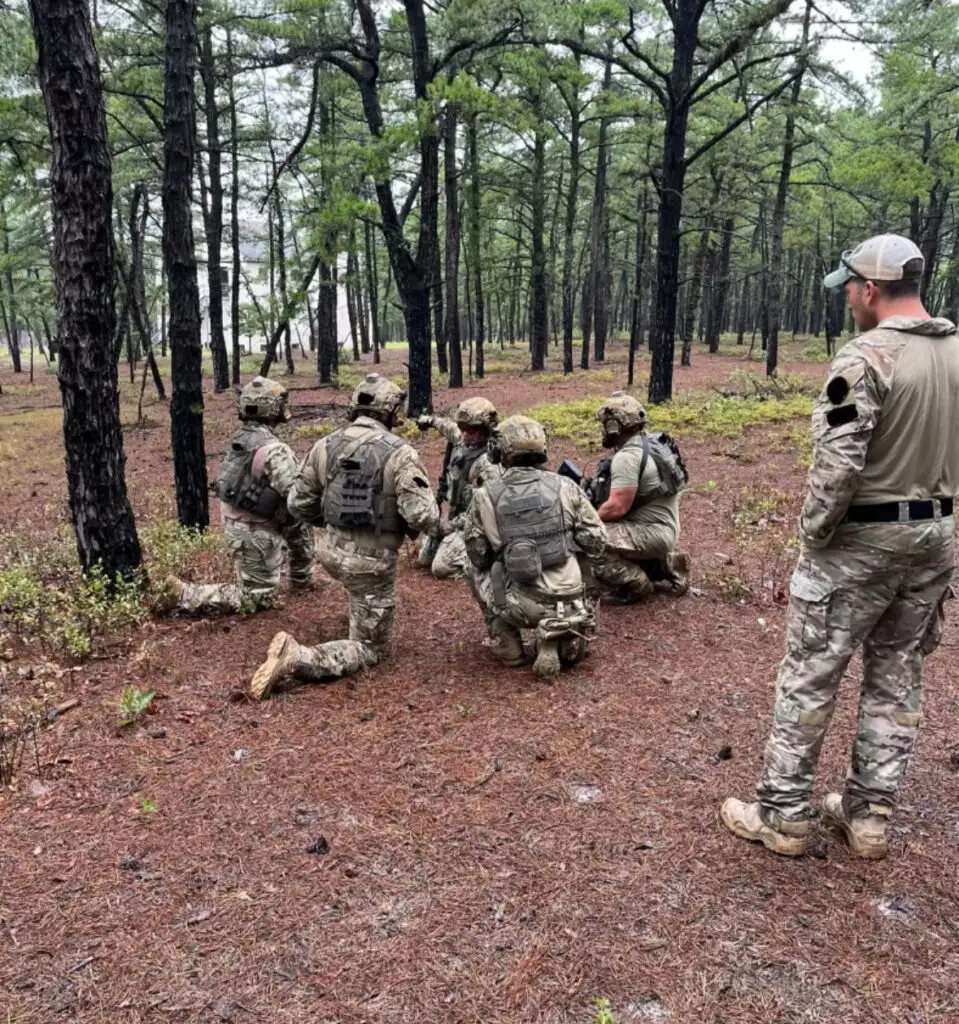
Law enforcement agencies — municipal departments, county agencies, and special response teams seeking advanced tactical proficiency, non-lethal force application, and active shooter protocols calibrated to operational environments.
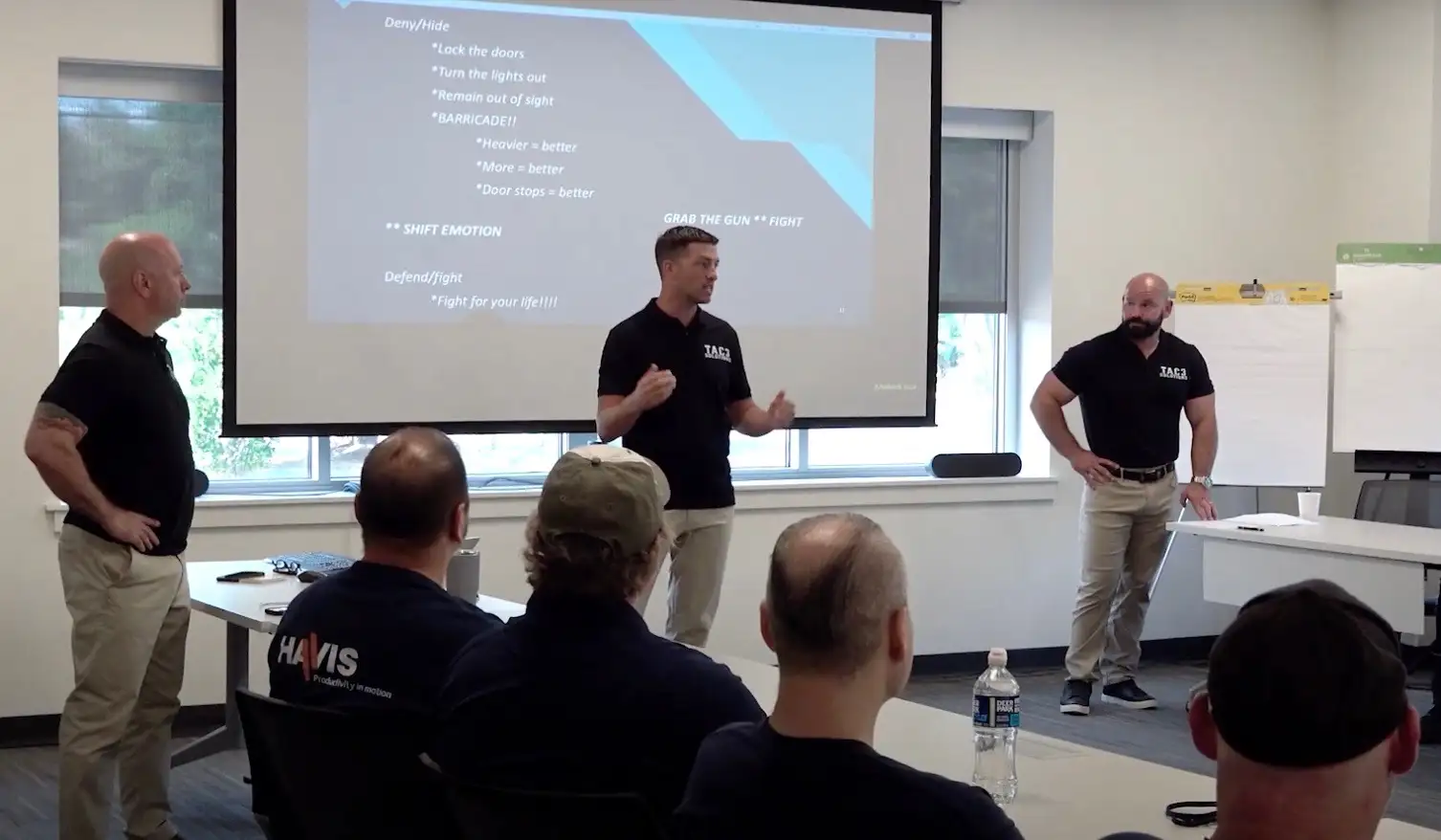
Corporate and organizational teams — businesses, healthcare systems, schools, and government facilities looking to build genuine threat awareness across their workforce. This is not checkbox compliance training. It is instruction that changes how people observe and respond to their environment.
Responsible civilians — individuals who want to develop situational awareness, understand how and why targeted violence occurs, and build confidence in their ability to protect themselves and others. No prior experience required.
Law enforcement agencies — municipal departments, county agencies, and special response teams seeking advanced tactical proficiency, non-lethal force application, and active shooter protocols calibrated to operational environments.
Corporate and organizational teams — businesses, healthcare systems, schools, and government facilities looking to build genuine threat awareness across their workforce. This is not checkbox compliance training. It is instruction that changes how people observe and respond to their environment.
Responsible civilians — individuals who want to develop situational awareness, understand how and why targeted violence occurs, and build confidence in their ability to protect themselves and others. No prior experience required.
The curriculum is structured in four phases:
Phase 1 — Threat Assessment: Offender profiling, pre-attack behavioral indicators, and the observable warning signs that precede the vast majority of targeted violence incidents. Most attackers display recognizable signals in advance — this phase teaches people to see and act on them.
Phase 2 — Decision Architecture: How to evaluate your options under extreme stress when time, information, and options are all limited. This is where most training programs fail — they teach the framework but not the decision-making process underneath it.
Phase 3 — Practical Response: Scenario-based drills conducted in your actual environment. Run/Hide/Fight is used as a framework, not a script. Exercises are designed around the specific layout, staffing patterns, and threat profile of your facility.
Phase 4 — Recovery: Post-incident actions, communication protocols, interaction with responding law enforcement, and trauma awareness for survivors. The session does not end when the scenario ends.
Phase 1 — Threat Assessment: Offender profiling, pre-attack behavioral indicators, and the observable warning signs that precede the vast majority of targeted violence incidents. Most attackers display recognizable signals in advance — this phase teaches people to see and act on them.
Phase 2 — Decision Architecture: How to evaluate your options under extreme stress when time, information, and options are all limited. This is where most training programs fail — they teach the framework but not the decision-making process underneath it.
Phase 3 — Practical Response: Scenario-based drills conducted in your actual environment. Run/Hide/Fight is used as a framework, not a script. Exercises are designed around the specific layout, staffing patterns, and threat profile of your facility.
Phase 4 — Recovery: Post-incident actions, communication protocols, interaction with responding law enforcement, and trauma awareness for survivors. The session does not end when the scenario ends.
ITR is TAC3's law enforcement–exclusive intensive, conducted over one to two days. It is built around a specific operational problem: officers responding to armed threats frequently encounter situations where lethal force is legal but not optimal — and they need trained, confident alternatives.
The program covers:
The program covers:
- Rapid threat assessment under operational pressure
- Verbal de-escalation and command presence
- Hands-on proficiency with less-lethal tools — OC, impact munitions, empty-hand control
- Tactical positioning, cover, and concealment
- Use-of-force law and post-incident documentation
- High-pressure scenario exercises replicating realistic encounter conditions
Program duration varies by format and audience, and is always tailored during the initial consultation.
Corporate active shooter awareness: Half-day to full day is standard. Condensed 90-minute executive briefings are available. Multi-day deployments for large organizations or multi-site rollouts can be arranged.
ITR (law enforcement): One to two days, depending on agency size and scenario complexity.
Civilian programs: Typically a half-day workshop format.
For agencies or organizations with ongoing training obligations, TAC3 designs recurring programs — quarterly refreshers, annual re-certification, or new-hire onboarding modules. We don't charge for time you don't need.
Corporate active shooter awareness: Half-day to full day is standard. Condensed 90-minute executive briefings are available. Multi-day deployments for large organizations or multi-site rollouts can be arranged.
ITR (law enforcement): One to two days, depending on agency size and scenario complexity.
Civilian programs: Typically a half-day workshop format.
For agencies or organizations with ongoing training obligations, TAC3 designs recurring programs — quarterly refreshers, annual re-certification, or new-hire onboarding modules. We don't charge for time you don't need.
A site assessment is a pre-training walkthrough conducted by a TAC3 instructor at your facility. We evaluate floor plans, identify chokepoints and structural vulnerabilities, assess existing security infrastructure, review access control points, and document all factors that will shape training content. This is not a formality — it is the foundation the program is built on.
Site assessments are included in the cost of any organizational program. They are not a separate line item or billable service. We do not deliver meaningful training to an organization without first understanding the environment their people actually work in.
Site assessments are included in the cost of any organizational program. They are not a separate line item or billable service. We do not deliver meaningful training to an organization without first understanding the environment their people actually work in.
Yes — and this is standard practice, not an upgrade. A healthcare facility carries a fundamentally different threat profile than a school, a financial institution, a house of worship, or a corporate office. The offender profile, the environmental constraints, the staffing patterns, and the realistic response options are all different. TAC3 designs every program around those specifics.
Industries and environments we have served include corporate campuses, healthcare systems, educational institutions, government facilities, and religious organizations. If you have a specific industry context or recurring threat concern, bring it to the consultation — it will be incorporated into the program design.
Industries and environments we have served include corporate campuses, healthcare systems, educational institutions, government facilities, and religious organizations. If you have a specific industry context or recurring threat concern, bring it to the consultation — it will be incorporated into the program design.
The difference is authority, capability, and objective — and it matters.
Law enforcement training assumes participants hold legal authority and trained capability to engage a threat directly. The curriculum focuses on doing that optimally — with tactical proficiency, appropriate force selection, and within legal and departmental frameworks.
Corporate training assumes civilian participants in a workplace environment. The focus is threat recognition, situational awareness, avoidance, and practical response options that do not require weapons or advanced training to execute effectively.
These two tracks do not overlap by design. Mixing civilian and law enforcement content produces neither result well. TAC3 keeps them separate and builds each from its own foundation.
Law enforcement training assumes participants hold legal authority and trained capability to engage a threat directly. The curriculum focuses on doing that optimally — with tactical proficiency, appropriate force selection, and within legal and departmental frameworks.
Corporate training assumes civilian participants in a workplace environment. The focus is threat recognition, situational awareness, avoidance, and practical response options that do not require weapons or advanced training to execute effectively.
These two tracks do not overlap by design. Mixing civilian and law enforcement content produces neither result well. TAC3 keeps them separate and builds each from its own foundation.
Requirements vary by track:
Civilian programs — no prerequisites. Built specifically for people with no prior firearms training, tactical background, or security experience.
Corporate programs — no prior training assumed. Designed for mixed-experience audiences across an entire organization, from executives to front-line employees.
ITR (law enforcement) — basic academy certification required. No SWAT, SRT, or advanced tactical experience is needed. The program is designed to build on the foundation every officer already has.
All programs begin by establishing a shared baseline. No one is left behind because of what they did or didn't bring in.
Civilian programs — no prerequisites. Built specifically for people with no prior firearms training, tactical background, or security experience.
Corporate programs — no prior training assumed. Designed for mixed-experience audiences across an entire organization, from executives to front-line employees.
ITR (law enforcement) — basic academy certification required. No SWAT, SRT, or advanced tactical experience is needed. The program is designed to build on the foundation every officer already has.
All programs begin by establishing a shared baseline. No one is left behind because of what they did or didn't bring in.
Yes. TAC3 provides attendance documentation and completion certificates for all participants in structured programs. For law enforcement agencies, we can provide detailed after-action reports and training records formatted for departmental documentation and state compliance requirements.
If your organization has specific documentation needs — for insurance purposes, HR records, legal compliance, or regulatory requirements — tell us before training begins. We will ensure the records meet your format before the session closes.
If your organization has specific documentation needs — for insurance purposes, HR records, legal compliance, or regulatory requirements — tell us before training begins. We will ensure the records meet your format before the session closes.
Three things:
1. Designate a point of contact — someone with authority to provide facility access, relay logistics to attendees, and act as a liaison between your organization and TAC3 before and after the session.
2. Brief your team on what to expect — scenario-based active threat training can be jarring without a heads-up. A short pre-session communication to participants prevents disruption and improves engagement on the day.
3. Bring organizational context — recent incidents, security gaps, policy concerns, or specific scenarios your team has worried about. Share them in the consultation or directly with the instructor. The more we know about your environment, the sharper the training will be.
We handle everything else.
1. Designate a point of contact — someone with authority to provide facility access, relay logistics to attendees, and act as a liaison between your organization and TAC3 before and after the session.
2. Brief your team on what to expect — scenario-based active threat training can be jarring without a heads-up. A short pre-session communication to participants prevents disruption and improves engagement on the day.
3. Bring organizational context — recent incidents, security gaps, policy concerns, or specific scenarios your team has worried about. Share them in the consultation or directly with the instructor. The more we know about your environment, the sharper the training will be.
We handle everything else.
Yes. TAC3 is based in New Britain, PA and primarily serves Bucks, Montgomery, Delaware, Chester, and Philadelphia counties — but we are available for engagements throughout Pennsylvania and into neighboring states including New Jersey, Delaware, and Maryland.
For law enforcement agencies, corporate organizations, or institutional clients with operations outside the region, distance is not a disqualifier. We've traveled for the right engagement and we're open to the conversation. Logistics, travel, and availability are discussed during the initial consultation.
If you're not sure whether we serve your area, reach out — the answer is almost certainly yes.
For law enforcement agencies, corporate organizations, or institutional clients with operations outside the region, distance is not a disqualifier. We've traveled for the right engagement and we're open to the conversation. Logistics, travel, and availability are discussed during the initial consultation.
If you're not sure whether we serve your area, reach out — the answer is almost certainly yes.
Use the contact form on this site or call us directly at (267) 377-3002. We'll schedule a brief consultation to understand your organization's size, environment, and training objectives. If appropriate, we'll arrange a site visit. From there, we build the program and set dates.
We respond to all inquiries promptly. If you know what you need, we can move quickly.
We respond to all inquiries promptly. If you know what you need, we can move quickly.